


Every 17 May, the world pauses to reflect on one of the most powerful tools we have in the fight against climate change and resource depletion: recycling. But what does recycling really mean, and why does it matter so much?
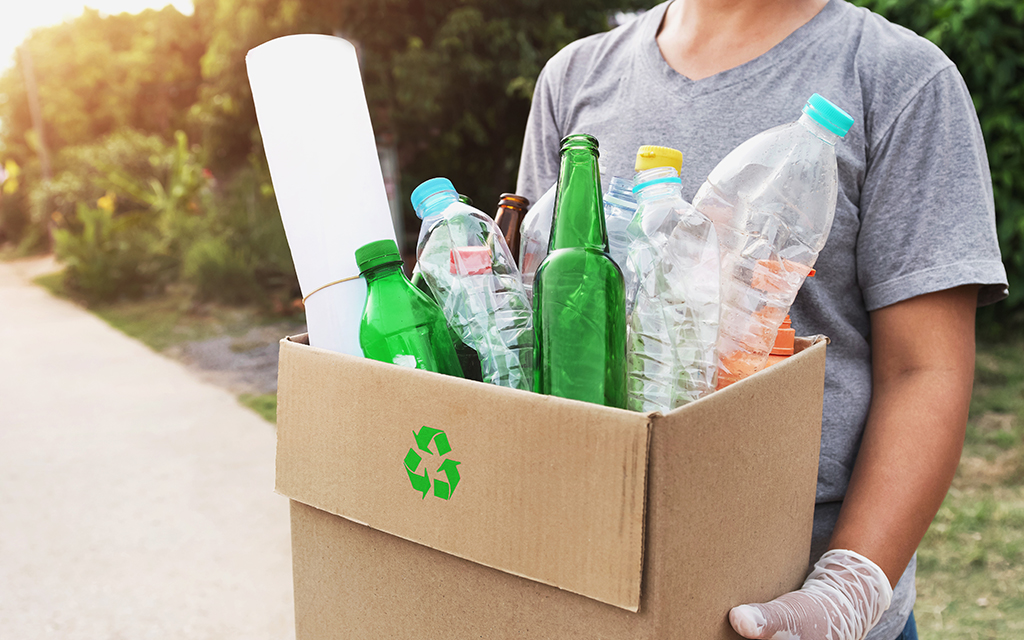
Recycling is the process of converting waste materials into new, usable products, reducing the need to extract and process raw materials from scratch. It is not just about separating paper from plastic at home. It is a complex system that involves collection, sorting, processing and manufacturing, and it touches virtually every sector of the economy.
When we recycle, we save energy, reduce greenhouse gas emissions, decrease pollution and extend the life of finite natural resources. According to the UN, more than 11.2 billion tonnes of solid waste are generated globally every year – more than one tonne per person. Without recycling and proper waste management, the environmental consequences would be devastating.
The rule of the 3Rs
Recycling is just one part of a broader framework known as the 3Rs: Reduce, Reuse, Recycle.
The order matters:
 Reduce: consuming less is always the most effective first step.
 Reuse: giving products a second life before discarding them.
 Recycle: transforming waste into new resources when reduction and reuse are no longer possible.
This hierarchy reminds us that recycling, while essential, is not a silver bullet. The goal is to design systems and products that generate as little waste as possible from the outset.
 Why dedicate a day to it?
World Recycling Day, officially recognised by UNESCO in 2005, serves as an annual reminder that the planet’s resources are finite and that our consumption habits have real consequences. It is also a moment to take stock of progress – and how much work remains to be done.
In a world saturated with information and competing priorities, having a dedicated date on the global calendar helps keep recycling and waste management on the public and political agenda. It is a moment for governments, businesses and citizens to align around a common purpose.
 From waste to resource: the circular economy
Beyond recycling, the broader vision is the circular economy – a model in which materials never become waste, but are continuously kept in use through reuse, repair, remanufacturing and recycling. This shift requires innovation at every level: in how products are designed, how materials are sourced, and how end-of-life is managed.
 This is where projects like BIO4COAT come in. By developing high-performance coatings from bio-based, renewable building blocks – with recyclability, compostability and no bioaccumulation as key design criteria – BIO4COAT is contributing to a future where even the coatings on our everyday products are part of a circular, fossil-free system.